Hey everyone, it’s Jake here, your go-to guy for all things clean room ceiling sandwich panels. Today, I’m diving into a question I get at least a dozen times a week from folks in cold regions: “What’s the snow-load capacity of these panels when they’re used up north?” Let me start by being real—this isn’t a one-size-fits-all answer, and if you’re shopping for clean room gear, cutting corners on snow load is a fast track to bad news (like leaks, panel bowing, or even full-on ceiling failure when a heavy snow dump hits). I’ve seen it, I’ve fixed it, and I’m here to break it down like I would for a fellow builder or facility manager over a coffee. Clean Room Ceiling Sandwich Panels
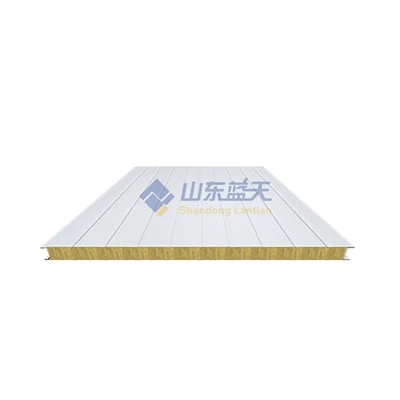
First off, let’s ground this in what clean room ceiling sandwich panels actually are, because that’s key to understanding their load capacity. These aren’t your garage’s flimsy metal siding panels. The ones we supply are usually a core of rigid polyisocyanurate (PIR) or expanded polystyrene (EPS) foam, sandwiched between two steel or aluminum facings. For clean rooms, the facings are often coated to resist dust, chemicals, and microbial growth—so they’re a bit heavier than standard siding, which helps with strength. The core is what’s insulating, but it also bears most of the load, right?
Now, snow load is tricky, especially in cold regions. It’s not just how much snow falls—density matters a lot. Fresh, fluffy snow is light, like 5-10 lbs per square foot, but once it’s been sitting for a few weeks, especially when temps hover near freezing and it gets wet, that turns into slush that can hit 20 lbs per sq ft. And if it freezes solid? That’s 30+ lbs, no joke. I remember a client in northern Minnesota last year who had 28 inches of wet snow on his warehouse roof—his old panels maxed out at 22 lbs per sq ft, so half the ceiling panels started buckling before we could even get a snow removal crew out. That’s why matching your panel’s snow load to your local average isn’t optional—it’s non-negotiable for cold climates.
So, what’s the actual snow-load capacity of our clean room ceiling sandwich panels? Let’s cut the jargon and give real numbers, but with a caveat: this depends on a few factors, not just the panel itself. The main one is panel thickness, first and foremost. Our standard clean room panels come in 2-inch, 3-inch, and 4-inch thicknesses, and each has a different load rating. The 2-inch panels—great for mild climates or lower-ceiling areas where you don’t need super thick insulation—typically have a maximum snow load of around 25 lbs per sq ft. Wait, that’s good for places with light snow, like the Pacific Northwest or parts of New England, but if you’re in Vermont or Alberta, that’s probably not enough. Our 3-inch panels? Those step up to 35 lbs per sq ft. That’s the sweet spot for most cold regions that get regular heavy snow, like Minnesota, Ontario, or upstate New York. Then there’s the 4-inch panels—these are workhorses for the harshest cold zones, like northern Alaska, northern Quebec, or mountain towns in Colorado. Their load capacity tops out at 45 lbs per sq ft, and that’s not just a random number—we test every single batch in our lab to make sure it holds up, not just in a static test, but repeated cycles of freezing and thawing too, because that’s what really kills panels in cold places.
But hold up, it’s not just the panel thickness. Let’s talk about the supporting structure, because a panel is only as strong as what’s holding it up. If you mount our 3-inch panels on flimsy metal framing that’s rated for 20 lbs per sq ft, your panel’s 35 lb capacity is useless. We always tell cold region clients to pair their panels with framing that’s at least 10-15% higher than the expected snow load. Another big one is installation—are the panels spaced correctly, are the fasteners tight, did the installer use the right sealant for cold temps? I’ve seen a perfect set of 4-inch panels fail because someone skipped a fastener in a high-load area near a roof edge, where snow drifts pile up. Drifts, by the way, are a huge one most people forget. A roof edge or a low spot in the roof can have snow loads 2-3 times higher than the average for the area. So if your town’s average snow load is 35 lbs per sq ft, that drift near the gable could be 70 lbs—so your panel needs to handle that, too. That’s why we always do a custom load calculation for any client in a cold region, not just send them the spec sheet.
Wait, let’s get specific about clean room needs, because that’s our bread and butter. Clean rooms are way pickier than regular warehouses, right? You can’t have gaps that let dust in, and you can’t have panel bowing that disrupts laminar flow or messes with HVAC. So our panels are engineered to maintain their flatness under load—no sagging, even at max snow. That’s a big difference from generic sandwich panels you might find at a big box store. The facings are high-gauge steel, so they don’t dent under heavy load, and the PIR core has a higher compressive strength than EPS, which is another reason we use PIR for most clean room applications—it’s stiffer, holds its shape better, and still has great insulation for cold regions (you don’t want heat escaping through your ceiling, driving up heating bills). I had a client in Toronto last year who switched from a competitor’s EPS panels to our PIR 3-inch panels. He told me he saved 12% on his heating bill last winter, and the ceiling never bowed even after two 20+ lb snow dumps. That’s a win-win.
Now, what about the cold itself? Does sub-zero temps affect the panel’s snow load capacity? Short answer: yes, but not in the way you might think. At super low temps, steel and PIR actually get a bit stiffer, so their load capacity goes up slightly, like 2-5%—that’s not enough to count on, but it’s a nice bonus. The real risk with cold isn’t the panel, it’s the snow itself. As I mentioned earlier, when temps are near freezing, snow melts a little then refreezes, turning into ice slush that’s heavier and more slippery—so the load is more concentrated on certain spots. Our panels are rated for that, but it’s still why proper roof pitch matters too. If your clean room ceiling has a shallow pitch (less than 1/4 inch per foot), snow can settle and drift more, whereas a steeper pitch helps snow slide off, reducing the overall load. That’s another thing we factor into our recommendations for cold regions—we don’t just sell panels, we give advice on how to set them up to handle snow.
Let’s talk about common mistakes people make in cold regions, because I want to save you from these. First, buying the cheapest panel you can find to save a buck. A lot of guys see a panel that says “50 lb load capacity” but it’s a thin-gauge facing and low-density core, so that 50 lb number is a total lie—they test it in a lab at room temp, not -20°F, and not with real snow load. We do third-party testing for all our load ratings, so you can trust the number you see on our spec sheets. Second, not accounting for future snow. Climate change is making snow events more extreme, right? We’ve seen 100-year snow events happen every 10 years in some parts of the US and Canada now. So we always recommend going with the next higher panel thickness than the minimum code requires. Code usually uses a 50-year snow load, but if you want your ceiling to last 20+ years without issues, go with 75-year or 100-year. That extra $1-2 per square foot is nothing compared to the cost of repairing a failed ceiling or cleaning up a contaminated clean room (oh right, clean rooms can’t just be fixed with a hammer—if a ceiling fails, you have to disassemble panels, sanitize everything, recertify the room. That’s way more expensive than overspending on panels). Third, skipping regular snow removal checks. Once a snow dump hits, don’t wait for it to melt—check your panels after every 12 inches of snow, especially after storms with wet snow. A little maintenance goes a long way.
So, to wrap up the real numbers, for anyone who just wants the quick answer: if you’re in a mild cold region (average snow load up to 30 lbs per sq ft, like upper Midwest or southern Canada), our 3-inch PIR panels work great. For extreme cold (average up to 50 lbs per sq ft, like northern Canada or Alaska), go with 4-inch. If you’re on the fence, reach out—we can send our in-house engineer to calculate exactly what you need, based on your location, roof pitch, and clean room specs.
Wait, let’s make this personal. I’ve been in this industry for 12 years, started out installing panels myself before moving into sales, so I know what works in the field. Last winter, I got a call from a client in Minneapolis who had an issue with a competitor’s panels. They bought 2-inch panels for their 35 lb per sq ft snow load, and 10 inches of wet snow caused three panels to bow so bad their HEPA filters were blocked. We replaced those with our 3-inch panels for less than the cost of repairing the filters and recertifying the clean room. That’s why I don’t just sell panels— I care if they actually hold up when you need them.
Now, if you’re currently shopping for clean room ceiling sandwich panels for a cold region, don’t just look at the spec sheet. Ask for third-party load test data, ask about how the panels perform in sub-zero temps, and ask for advice specific to your area. We don’t do pushy sales tactics here—we’d rather help you get the right panels the first time, than have you call us back in a year when something goes wrong.
If you have more questions, or you’re ready to get a quote, hit us up. No salesy hoops, just straight talk about what you need for your clean room in a cold climate.
Glass Wool Sandwich Panel References
- International Code Council (ICC). International Building Code (IBC) 2021: Snow Load Requirements for Cold Climate Structures.
- American Society of Heating, Refrigerating and Air-Conditioning Engineers (ASHRAE). 2022 ASHRAE Handbook: HVAC Applications, Section 20 – Load Calculations.
- National Roofing Contractors Association (NRCA). Snow Load Guidelines for Metal Roof Panels, 2023.
- Clean Room Technology Association (CRTA). Specification Guidelines for Clean Room Enclosure Panels, 2022.
Shandong Lantian New Material Technology Co., Ltd.
Shandong Lantian New Material Technology Co., Ltd. is one of the most reliable manufacturers and suppliers of clean room ceiling sandwich panels in China, featured by quality products and low price. Please rest assured to buy bulk clean room ceiling sandwich panels for sale here from our factory. Contact us for pricelist and customized service.
Address: North End of Wanshida Road, Dianzi Town Industrial Park, Boxing County, Binzhou City, Shandong Province
E-mail: Lantian023@ltaaaaa.com
WebSite: https://www.ltpirpanels.com/
