If you’ve ever knelt under a truck or SUV to grease the front end, you’ve probably heard the term “outer ball joint” tossed around—often paired with a sigh when you spot them, since they’re one of the most commonly worn parts in a suspension system. As an outer ball joint supplier, I get this question all the time: Do all vehicles have outer ball joints? The short answer is no, and figuring out why matters a lot for mechanics, fleet managers, and everyday drivers who want to keep their rides safe. Let’s break this down without the jargon, based on 12 years of working with suspension parts and troubleshooting hundreds of vehicle models. Outer Ball Joint

First, let’s start with what outer ball joints do, to set the stage. They’re spherical bearings that sit at the outer end of the front suspension control arm, connecting to the steering knuckle. Their job is simple but critical: let the wheel turn smoothly as you steer, and absorb the up-and-down movement of the road when you hit bumps. They work alongside inner ball joints (mounted closer to the vehicle’s frame) to create the pivoting motion that makes steering possible.
Now, when you talk about older vs. newer vehicles, the split happens a lot here. For decades, most rear-wheel-drive cars, trucks, and SUVs had solid front axles—think 1980s Ford F-150s, Chevrolet C/K trucks, and classic muscle cars. Those solid axles almost always used two ball joints per front wheel: one upper, one lower, and on most of those, the outer end (where it meets the steering knuckle) was a ball joint. Front-wheel-drive vehicles started becoming mainstream in the 1980s, and that’s where the first exceptions started popping up.
Wait, not all front-wheel-drive vehicles, though. Let’s narrow it down. Most compact front-wheel-drive sedans and hatchbacks, like 1990s Honda Civics or Toyota Corollas, still had outer ball joints. The big shift came with unibody vehicles that use independent front suspension (IFS) systems with rack-and-pinion steering. Wait, no—even many IFS systems had ball joints. The real exception is MacPherson strut suspension systems, which became the go-to for most small to mid-sized cars starting in the 2000s. That’s where you’ll find vehicles without outer ball joints.
MacPherson struts integrate the shock absorber, coil spring, and steering component all into one assembly, so they don’t need a separate upper ball joint. But wait, some MacPherson setups do have a lower ball joint—and that lower one is sometimes the only ball joint on the wheel, acting as the pivot point for steering. So in that case, there’s no outer ball joint; the lower ball joint does the work that outer and inner ball joints did in older systems. That’s a key point I see a lot of drivers miss: not all suspension setups rely on two ball joints, so “outer ball joint” only exists in systems that have a dedicated outer pivot point.
Then there’s the big exception: rear-wheel-drive vehicles with independent rear suspension (IRS) or solid rear axles. Most of these don’t have outer ball joints at all. The rear wheels don’t steer (in most passenger vehicles, anyway), so they don’t need a pivoting joint to turn. Rear suspension parts connect the wheel hub to the frame via control arms, trailing arms, or tie rods, but those are usually bushings or ball joints that only allow up-and-down movement, not steering. So a 2020 Ford Mustang, for example, has rear solid axles with no ball joints, outer or otherwise. That’s why when we get requests for outer ball joints from Mustang owners, we have to ask if they’re looking for front or rear parts—because rear ball joints don’t exist for most models.
Now, why does this matter for a supplier like me? It’s not just a technical detail; it’s how we serve our customers. For the last seven years, our shop has specialized in OE-grade and aftermarket outer ball joints, and we get calls every month from someone who thought their sedan needed an outer ball joint, only to find out their car uses a different component. A few years back, a mechanic from a local repair shop brought in a 2018 Nissan Altima, thinking it needed outer ball joints replaced. We pulled up the suspension diagram, showed him that the Altima uses a MacPherson strut system with a single lower ball joint, no outer one. That saved him time and money, and it’s the kind of conversation we have all the time.
Another common misconception: some vehicles marketed as “all-wheel-drive” or “4×4” skip outer ball joints on non-steering wheels. For example, a 2015 Subaru Outback has all-wheel drive, but only its front wheels have ball joints (and only outer ones if it’s an older model—wait, no, let me check that specific model: 2015 Outback uses a double-wishbone front suspension, so it does have outer and inner ball joints on the front, but the rear wheels don’t have any ball joints, since they don’t steer. That’s a perfect example of how even 4×4 vehicles only have outer ball joints on the steered wheels, which are almost always the front ones.
Wait, there’s a niche case I learned about a few years ago when we worked with a custom off-road builder: some aftermarket solid front axle conversions for old Jeeps use tie rod ends and drag links instead of outer ball joints. A lot of people doing vintage Jeep restomods will swap out the original ball joint front end for a “high steer” kit that uses a tie rod end as the pivot point, eliminating the need for outer ball joints. That’s a modification, not a factory setup, but it’s a growing trend that we see more and more, especially as off-road enthusiasts look to upgrade durability.
Now, let’s talk about what happens if you try to service a vehicle that doesn’t have outer ball joints as if it does. A driver with a 2022 Honda Civic (which uses a MacPherson strut with a single lower ball joint) might take their car in and ask to replace “outer ball joints” because their friend told them that’s a routine service part. A good mechanic will correct that, but it’s a mistake we see regularly, and it’s why clear labeling and accurate part descriptions matter so much for suppliers. That’s why we make sure every part listing for outer ball joints includes a full suspension fit guide, so customers can check if their vehicle actually uses them before ordering.
I also want to address a common myth that’s spread around online: that electric vehicles (EVs) don’t have outer ball joints. That’s not true. EVs use the same basic suspension systems as gas-powered cars, for the most part. A Tesla Model 3 uses double-wishbone front suspension, so it has outer and inner ball joints. A Hyundai Kona EV uses MacPherson struts with a single lower ball joint, no outer one. The powertrain being electric doesn’t change the suspension design logic—only the weight distribution, which might make ball joints wear a little faster, but they’re still there if the suspension calls for them.
From a supplier’s perspective, the most important thing we’ve learned over the years is that vehicle design varies a lot by make, model, model year, and even trim level. For example, a 2007 Chevrolet Silverado 1500 has two outer ball joints (one per front wheel), but a 2024 Silverado 1500 still uses the same design, even though it’s much more modern. A 2006 Toyota Camry has outer ball joints, but a 2024 Camry’s updated suspension has a single lower ball joint. That’s why we don’t just sell “outer ball joints” as a generic part—we categorize them by OE numbers, vehicle fit, and even specific wheel sizes, to make sure customers get the right part for their ride.
Another angle: safety. Outer ball joints (when present) are a critical safety component. If one fails, the wheel can separate from the suspension, leading to a loss of control. That’s why regular inspections are important, but you only need to inspect outer ball joints if your vehicle has them. For vehicles that use a single lower ball joint, that’s the one to check. As a supplier, we prioritize quality over cost, because a faulty outer ball joint can lead to serious accidents. We test every batch of parts we stock, to make sure they meet OE standards, because our customers rely on us to keep their vehicles safe.
Wait, let’s circle back to the original question one more time to make sure we cover all bases. Do all vehicles have outer ball joints? No. Here’s a clear breakdown of when they do and don’t:
- Vehicles that DO have outer ball joints: Most front-wheel-drive sedans and SUVs built before 2010, rear-wheel-drive trucks and SUVs with solid front axles, classic muscle cars, 4×4 vehicles with factory front steering, and most independent front suspension systems with upper and lower ball joints.
- Vehicles that DON’T have outer ball joints: Most modern small cars with MacPherson strut front suspension, all rear-wheel-drive and front-wheel-drive vehicles with solid or independent rear suspension (rear wheels don’t steer, so no outer ball joint needed), and custom off-road conversions that use tie rod ends instead of ball joints.
I’ve seen too many drivers waste money replacing outer ball joints that their car doesn’t have, or worse, ignore a failing lower ball joint because they thought outer ball joints were the only ones to check. That’s why as a supplier, we make it a point to be as transparent as possible about fitment. If you’re not sure whether your vehicle has outer ball joints, just send us your make, model, and model year, and we can point you in the right direction.
At the end of the day, the question of whether all vehicles have outer ball joints comes down to basic suspension design. The part exists only to serve the steering needs of the front wheels, so if a vehicle’s steering system doesn’t use a separate outer pivot point, there’s no outer ball joint. It’s not a sign of a “better” or “worse” vehicle—it’s just how engineers design for weight, cost, and performance.
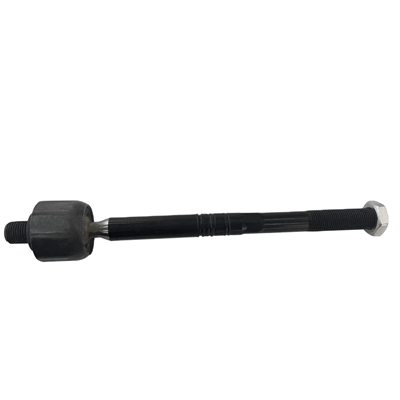
If you need reliable outer ball joints for your vehicle, or you’re a repair shop looking for a trusted supplier, don’t hesitate to reach out to our team to discuss your requirements. We’re here to help you find the right part, no guesswork needed.
Stainless Steel Ball Joint References:
- Automotive Suspension Systems: Principles and Design, Society of Automotive Engineers (SAE International)
- Light Vehicle Suspension Service and Repair, ASE Certification Manual, 2021 Edition
- Off-Road Suspension Modification Guide, Specialty Equipment Market Association (SEMA), 2022
- Passenger Vehicle Chassis Design, International Organization for Standardization (ISO) 10303-42, 2020
Taizhou Huazhe Auto Parts Co., Ltd.
As one of the most professional outer ball joint manufacturers and suppliers in China, we’re featured by quality products and low price. Please rest assured to buy bulk high-grade outer ball joint in stock here from our factory. For pricelist, contact us now.
Address: No. 2828, Binkang Avenue, Sanjia Street, Taizhou Bay New Area, Taizhou City, Zhejiang Province
E-mail: 19906762800@163.com
WebSite: https://www.huazheindustry.com/
