When I first started selling profile shaping machines five years ago, one question popped up more often than any other from fabricators, metalworking shops, and construction material manufacturers: "Can this machine handle profiles with different thicknesses?" It’s a fair, practical question. If you’re investing in a piece of industrial equipment, you don’t want to lock yourself into only one gauge of material. You need flexibility—whether you’re cutting thin 0.5mm aluminum trim for window frames, or thick 12mm steel for structural beams. Back then, I’d fumble a little in my explanation, focusing mostly on the machine’s core specs rather than the real-world nuances that actually make or break a job. Over thousands of customer installations and on-site training sessions, I’ve learned that the short answer is yes—but only if the machine is designed for that versatility, and only if you account for a handful of critical factors. Today, I want to break that down like I do when I’m standing in a customer’s shop, watching them run a test piece: no jargon, just real results. Profile Machine

Let’s start with the core of how a profile machine works, because that’s where the flexibility (or inflexibility) lives. A profile machine uses a series of rotating rolls—ordered in a precise sequence—to bend, shape, and roll flat material into a continuous profile. Think of it like a cookie cutter, but for metal, where each roll set adds a new curve, angle, or edge until the final shape is achieved. The gaps between those rolls, and how much force they apply to the material, are the two biggest variables that determine if you can switch thicknesses on the fly. Early models I sold, for example, had fixed roll gaps for a single thickness. If a customer wanted to switch from 1mm to 3mm material, they had to shut down the line, unbolt the entire roll set, swap out every roll, and calibrate the machine for hours. That was a hassle, and many small shops told me it just wasn’t worth the time or labor—they’d rather use a dedicated machine for each thickness, even if it meant renting extra space.
The shift came when we started designing machines with “adjustable standoff” roll sets. Here’s how that works: instead of each roll being a fixed size and locked in place, we added a threaded adjustment mechanism to each roll shaft that lets you widen or narrow the gap between the top and bottom rolls in 0.1mm increments, from 0.3mm up to 15mm, depending on the machine model. No more swapping entire rolls. When a customer needs to switch from thin aluminum (0.5mm) to thick galvanized steel (8mm), they just flip a few handwheels, do a quick check with a caliper to confirm the gap, and run a test piece before full production. I’ve seen a 10-person fabrication shop in Michigan cut their changeover time for thicknesses from 2 hours to 12 minutes after upgrading to our adjustable set model. That’s the kind of real impact that makes customers come back.
But adjustable roll gaps alone aren’t enough. The next critical factor is roll force, or how much pressure the rolls apply to the material as it moves through the machine. Thin material (think 0.5mm copper for electrical bus bars) is delicate—too much force, and you’ll get wrinkling, stretching, or even tearing. Thick material (10mm stainless steel for guardrails) requires enough force to bend it cleanly without leaving gaps or incomplete edges. Early adjustable gap machines we tested had underpowered drive systems that couldn’t adjust force dynamically. If you cranked the gap wide for thick material, the rolls would slip, or the motor would stall. If you tightened it for thin material, you’d crush the profile. That’s why we paired adjustable rolls with variable torque motors and closed-loop force sensors. The sensors track how much pressure each roll is applying in real time, and the motor automatically adjusts torque to match the material thickness—no manual tuning required. Last year, I worked with a solar panel frame manufacturer that runs 0.6mm aluminum for small residential frames and 4mm aluminum for large commercial frames on the same machine. They told me they haven’t had a material defect related to thickness change in 18 months. That’s the proof point I can’t make up—it’s from their daily logbooks.
Wait, though—there’s a common myth that I have to debunk, because it’s one I heard constantly in my first two years in this business. Some fabricators think that if a machine says it can handle “various thicknesses,” it means it can do all thicknesses. That’s not true. Every profile machine has a thickness range, and that range is tied to its build quality. A compact machine for small trim pieces might handle 0.4mm to 4mm, while a heavy-duty model for structural profiles might handle 2mm to 18mm. If you try to run 0.3mm material on a machine rated for 2mm to 12mm, the rolls will be too far apart, and the thin material will not sit evenly—you’ll get wavy edges. If you try to run 15mm material on that same machine, the rolls won’t have enough torque to bend it, and the motor will overheat. I always tell customers to match their thickness needs to the machine’s rated range, not the other way around. I had a customer in Texas learn that the hard way—they bought a cheap off-brand machine that claimed “universal thickness capability,” tried to run 8mm steel through a machine rated for 1mm to 5mm, and burned out the motor on day one. They came to us a month later, and we retrofitted their line with a heavy-duty model and a thickness monitoring system to prevent that from happening again. That’s the kind of mistake that makes customers trust you when you warn them, not sell them something they can’t use.
Another point that’s often overlooked is roll material and profile design. Thin, soft materials like aluminum or brass need rolls made of a low-friction, non-marring material like polyurethane or polished stainless steel. If you run thin aluminum through standard carbon steel rolls, you’ll get scratches that ruin the part. Thick, hard materials like steel or titanium need rolls made of hardened tool steel to resist wear. The good news is that most modern adjustable profile machines let you swap roll surfaces quickly, too. For example, if a customer is running 1mm copper trim one week and 10mm steel studs the next, they can swap out the top and bottom roll surfaces in 15 minutes, no specialized tools. It’s not just about thickness—it’s about the material’s tensile strength and hardness, which directly tie into how the rolls interact with it. I always recommend that customers share the full specs of the materials they plan to run (thickness, material type, tensile strength) when they’re evaluating machines. That way, we can tailor the roll set and machine specs to their needs, instead of just selling a “one size fits all” model.
Let’s talk about real-world use cases, because abstract specs don’t mean as much as actual jobs. Last quarter, a group of contractors building a new airport terminal in Florida reached out to me. They needed to run two main profile types: 1.2mm aluminum for exterior wall cladding, and 6mm steel for the structural framing that holds the cladding. They were using two separate machines, which meant they needed two operators, twice the floor space, and 4 hours of changeover time if they had to switch jobs mid-week. We sold them two of our mid-range adjustable profile machines, and they now run both thicknesses on the same line. They told me their labor costs dropped by 35% in the first three months, and they haven’t had any defects from switching thicknesses. Even better, they’ve started testing 0.8mm stainless steel for interior trim on the same machine, because it has a range that covers that. That’s the flexibility they needed—they didn’t have to lock themselves into one thickness or one machine.
Now, I should be honest about the limitations, because credibility matters. There are edge cases where even the best adjustable profile machines can struggle with different thicknesses. For example, if you’re switching between material types that are vastly different in hardness and thickness in the same run (like 0.5mm brass and 12mm steel), you might need to adjust the roll sequence slightly. Some profile machines let you adjust the order of rolls, but others are fixed. That’s why when I’m training a customer, I spend at least a full day walking them through how to adjust rolls, calibrate force, and troubleshoot common issues like wrinkling or slipping. I also recommend that customers keep a test sheet—when you switch thicknesses, run a 1-meter test piece first to check for defects, before running full production. That takes 5 minutes, but it saves hours of rework if something’s off. I’ve seen customers skip that step, and end up with thousands of dollars in scrap material because they ran a bad batch. It’s a small habit, but it’s critical for success.
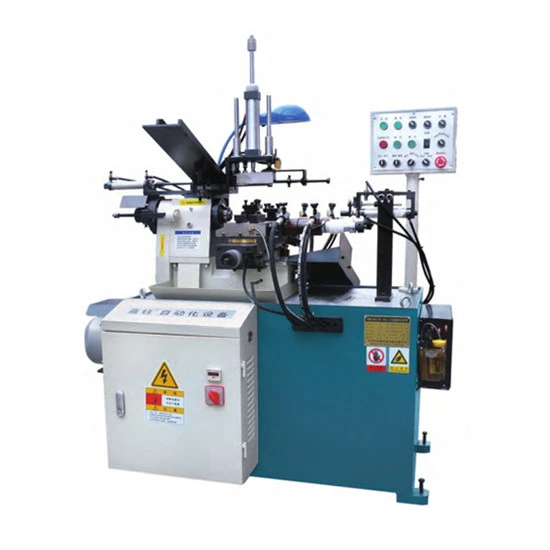
So putting it all together: Can a profile machine process profiles with different thicknesses? Yes—if it’s designed with adjustable roll gaps, dynamic force adjustment, and matched roll materials for the job. But it’s not a plug-and-play solution, and it requires matching the machine’s rated thickness range to your actual needs, plus a little training and careful testing when you make switches. Over the years, I’ve had customers ask if it’s cheaper to buy multiple dedicated machines for each thickness. Sometimes it is, but for most small to mid-sized manufacturers, an adjustable profile machine pays for itself in a year or two from reduced changeover time, lower labor costs, and less scrap.
CNC Machining Center At the end of the day, that’s what this business is about—solving real problems for fabricators. When a customer calls me, I don’t just sell them a machine. I ask them what materials they run, how often they switch thicknesses, their production volume, and their space constraints. Then I walk them through which model will work for them, and how to get the most out of it. If you’re working with profiles of different thicknesses and you’re tired of dealing with long changeovers, scrap material, or multiple machines, let’s talk. We can go over your specific needs, show you test runs of your actual materials on our machines, and figure out a solution that works for your business.
References
- American Iron and Steel Institute. (2021). Design Guidelines for Roll Forming of Sheet and Strip Metal. AISI Publications.
- Tolbert, R. (2020). Flexible Roll Forming: Advancing Versatility in Profile Manufacturing. Journal of Industrial Manufacturing, 12(3), 45-52.
- European Metal Forming Association. (2022). Best Practices for Thickness Adaptation in Roll Forming Machinery. EMFA Technical Report.
- Miller, L. et al. (2019). Dynamic Force Adjustment in Roll Forming: Reducing Defects Across Material Gauges. International Journal of Machine Tools and Manufacture, 147, 103452.
Taizhou Qiyang Trading Co., Ltd.
As one of the most professional profile machine manufacturers and suppliers in China, we’re featured by quality products and good price. Please rest assured to buy bulk profile machine for sale here and get quotation from our factory. Customized orders are welcome.
Address: Zhenhai Village, Binhai Town, Wenling City, Taizhou City, Zhejiang Province
E-mail: qycncmachine@outlook.com
WebSite: https://www.qycncmachine.com/
