Hey there! As a DC gearmotor supplier, I’ve gotten tons of questions about how the current draw changes with the load in a DC gearmotor. So, I thought I’d share my insights on this topic. DC Gearmotor
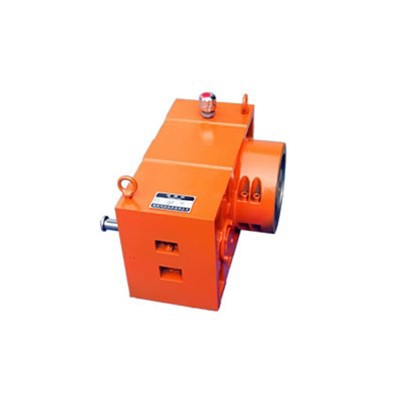
Let’s start with the basics. A DC gearmotor is a combination of a DC motor and a gearbox. The gearbox is used to increase torque and reduce speed, which is super useful in a whole bunch of applications, like robotics, automotive, and industrial machinery.
Now, the current draw of a DC gearmotor is directly related to the load it’s driving. When the load on the motor increases, the current draw also goes up. This is because the motor has to work harder to overcome the resistance of the load.
Let’s break it down a bit more. When you first turn on a DC gearmotor with no load, the current draw is relatively low. This is called the no – load current. The motor is just spinning freely, so it doesn’t need a lot of power. The no – load current is mainly used to overcome the internal friction of the motor and the gearbox, as well as to create the magnetic field needed for rotation.
But when you start adding a load to the motor, things change. The motor has to generate more torque to move the load. According to Ohm’s law and the principles of electromagnetism in a DC motor, the current flowing through the motor’s windings increases. The relationship between the load and the current draw is pretty much linear in the normal operating range of the motor.
For example, if you’re using a DC gearmotor to drive a conveyor belt, when the conveyor is empty, the motor doesn’t have to work very hard, so the current draw is low. But as you start putting more and more items on the conveyor, the load on the motor increases, and so does the current draw.
However, it’s important to note that there’s a limit to how much load a DC gearmotor can handle. If you keep increasing the load beyond the motor’s rated capacity, the current draw will keep going up until it reaches a point where it can damage the motor. This is called the stall current. When the motor stalls, it means the load is so heavy that the motor can’t turn anymore. At this point, the current draw is at its maximum, and if the motor stays in this state for too long, it can overheat and burn out.
Another factor that can affect the current – load relationship is the efficiency of the motor and the gearbox. A more efficient motor and gearbox will require less current to drive a given load. This is because less power is wasted as heat. So, when you’re choosing a DC gearmotor for your application, it’s a good idea to look for one with high efficiency.
Now, let’s talk about how to measure the current draw of a DC gearmotor. You can use a multimeter to measure the current flowing through the motor. Make sure you’re familiar with how to use the multimeter safely, and always disconnect the power source before making any connections. You can also use a power analyzer to get more detailed information about the power consumption and current draw of the motor under different loads.
As a supplier, I’ve seen a wide variety of applications for DC gearmotors, and each one has its own unique requirements when it comes to load and current draw. For example, in a small robotic application, you might need a motor with low current draw at low loads, but still be able to handle a moderate increase in load when the robot is performing a task. In an industrial setting, on the other hand, you might need a motor that can handle heavy loads with high current draw for extended periods of time.
Matching the right DC gearmotor to your application is crucial. If you choose a motor that is too small for the load, it will have a high current draw even at normal loads, which can lead to overheating and premature failure. On the other hand, if you choose a motor that is too large, it will be more expensive and less efficient than it needs to be.
So, how do you determine the right motor for your load? First, you need to know the torque requirements of your application. Torque is the rotational force needed to move the load. Once you know the torque requirements, you can look at the motor’s torque – speed and current – torque curves provided by the manufacturer. These curves will give you a good idea of how the motor will perform under different loads.
You should also consider the duty cycle of your application. The duty cycle is the ratio of the time the motor is running under load to the total time. If your application has a high duty cycle, you’ll need a motor that can handle continuous operation under load without overheating.
At our company, we have a wide range of DC gearmotors to choose from. Whether you’re looking for a small, low – power motor for a hobby project or a large, high – torque motor for an industrial application, we’ve got you covered. Our team of experts can help you select the right motor for your specific needs, taking into account factors like load, current draw, efficiency, and duty cycle.

If you’re in the market for a DC gearmotor and want to learn more about how the current draw changes with the load, or if you need help choosing the right motor for your application, don’t hesitate to reach out. We’re here to answer your questions and provide you with the best possible solutions. Contact us today to start the conversation and let’s find the perfect DC gearmotor for you!
Servo Motor References
- "Electric Motors and Drives: Fundamentals, Types and Applications" by Austin Hughes and Bill Drury
- "DC Motors: Principles, Controls, and Applications" by various industry experts in motor technology
Zibo Auric Mechanical and Electrical Technology Co., Ltd.
As one of the leading dc gearmotor manufacturers and suppliers in China, we warmly welcome you to buy advanced dc gearmotor for sale here from our factory. All customized motors are with high quality and competitive price.
Address: B419, High-tech Entrepreneurship Park, High-tech Zone, Zibo City
E-mail: cui@auricmotor.com
WebSite: https://www.auricmotor.com/
